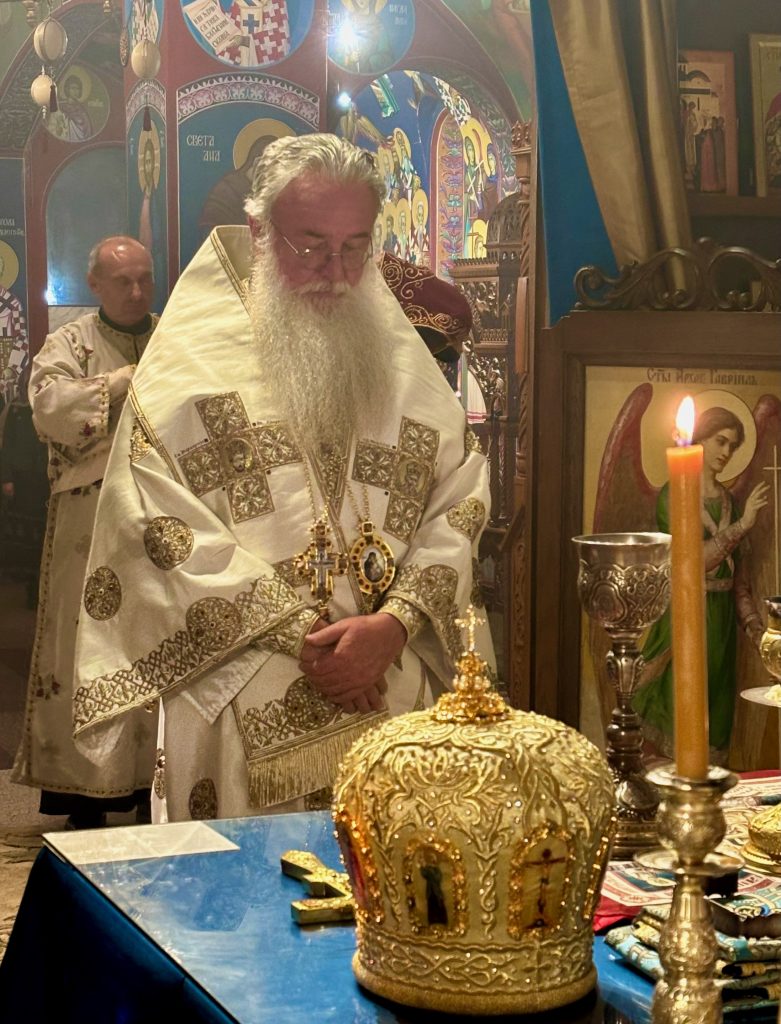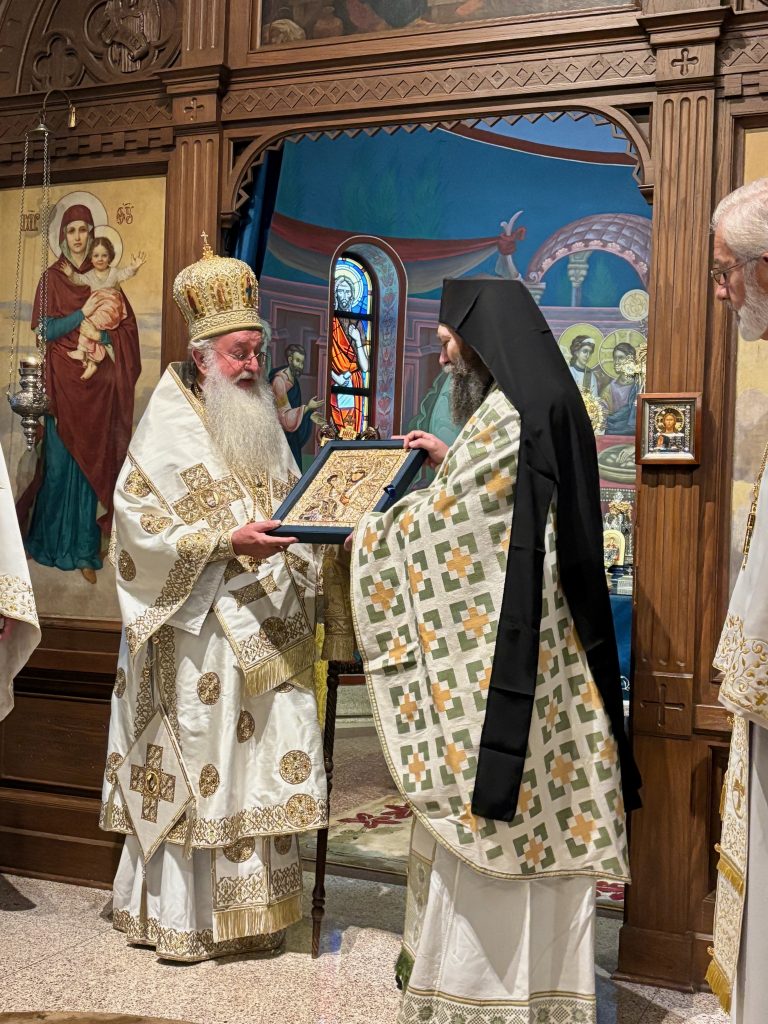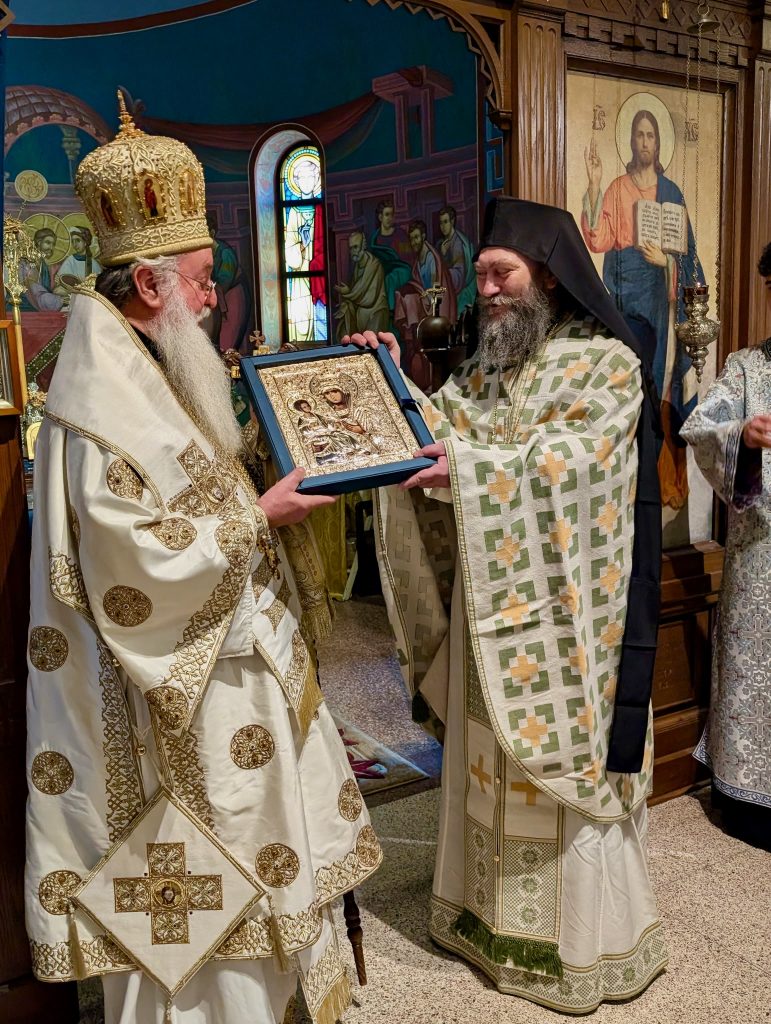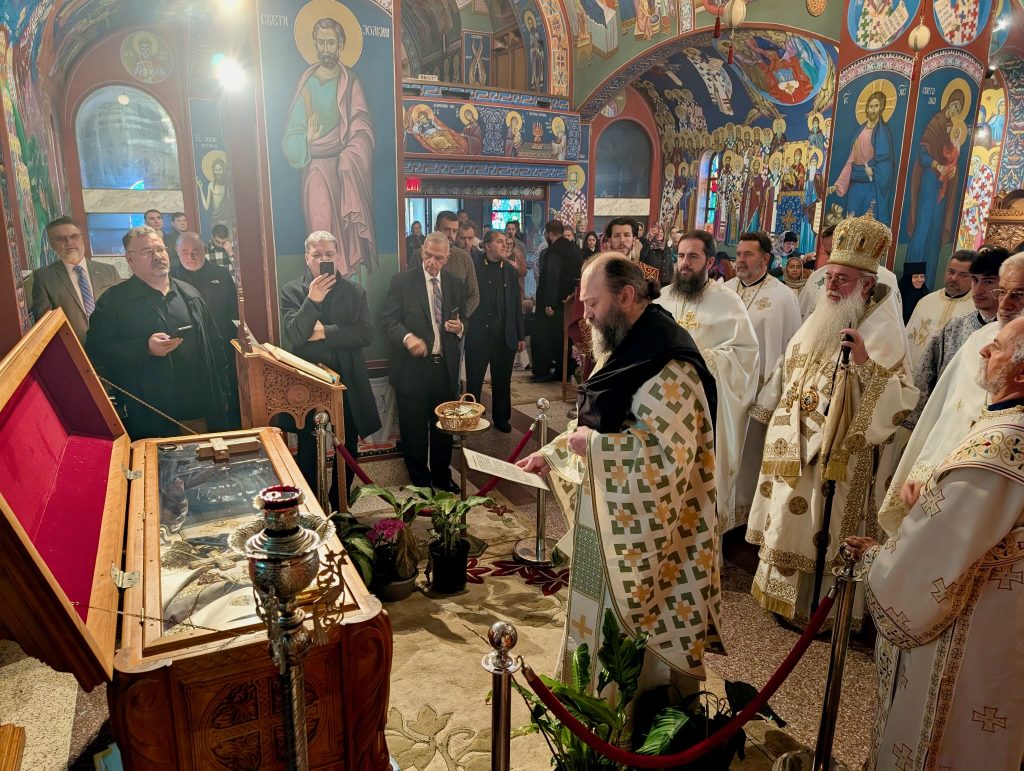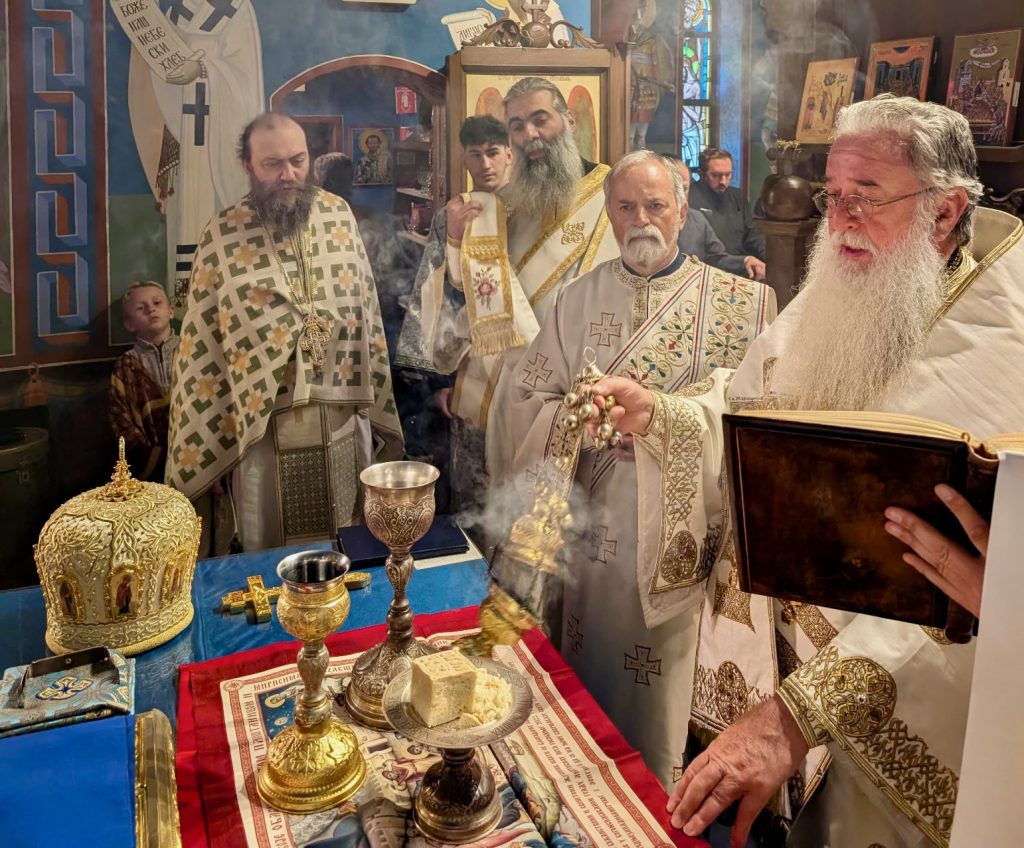
On the feast day of Saints Sergius and Bacchus, a Hierarchical Divine Liturgy was celebrated at the Monastery of St. Sava in Libertyville. The event marked the fortieth anniversary of the episcopal ministry of His Eminence Metropolitan Longin.
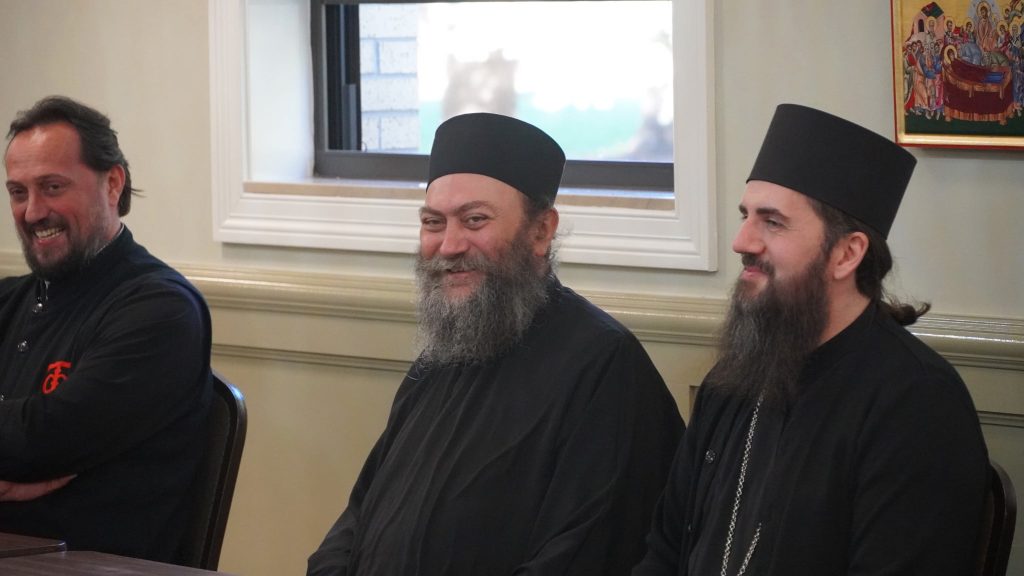
Concelebrating with the Metropolitan was Archimandrite Metodije, Abbot of the Hilandar Monastery, along with numerous other clergy.
On this joyful occasion, His Eminence elevated Father Petar Sailović (Class of 2004), an alumnus of the St. Sava School of Theology in Libertyville, to the rank of Archpriest.
An Interview with His Eminence Metropolitan Longin
Conducted by Stefan Radović
Stefan Radović: Your Eminence, you recently marked forty years since your consecration as bishop in a simple and prayerful way. What thoughts and feelings accompanied you on this occasion?
Metropolitan Longin: Every anniversary is a reminder not of achievement, but of mercy. The Lord has allowed me to serve His Church for four decades — through peace and war, joy and suffering — and that humbles me. I chose to mark the day quietly, with a simple celebration at St. Sava Monastery in Libertyville, together with the Abbot of Hilandar, Archimandrite Metodije. A bishop must live in humility. I began my life as a monk, and I wish to finish it as one — in repentance and gratitude.
SR: Let us go back to that moment in 1985 when you were consecrated a bishop. What do you remember most vividly?
ML: I was only thirty years old, and the weight of that calling was great. I remember thinking, Who am I to bear the yoke of the episcopacy? But the Church, in her wisdom, does not call us because we are ready — she calls us so that God may strengthen us. The laying-on of hands is a mystery that transforms fear into service. I felt surrounded by the love of my fellow hierarchs, but even more by the unseen presence of the saints.
SR: You have served in many different parts of the world — Australia, Dalmatia during wartime, and now America. How did these experiences shape you as a hierarch?
ML: Each place was a new Golgotha and a new Resurrection. In Australia I met a faithful people far from their homeland, yearning for their roots. In Dalmatia I witnessed suffering and destruction, but also heroic endurance and faith. Here in America I see both the challenges of secular life and the beauty of freedom — the freedom to build, to unite, to witness Orthodoxy with dignity. The bishop’s home is not geography; it is the altar of God.
SR: You played a significant role in the reconciliation that healed divisions within the Serbian Church in North America. What lesson do you carry from that experience?
ML: Reconciliation requires humility. There were wounds that ran deep — pride, fear, misunderstanding. But unity cannot be achieved through victory, only through forgiveness. When we placed the Cross above our differences, healing began. Today I thank God that we can serve together as one Church in America. It was not an institutional success but a spiritual resurrection.
SR: Society and culture have changed greatly over the past forty years. What gives you hope, and what concerns you about the Church today?
ML: I am concerned by how easily people are distracted from silence, from inner prayer, from patience. We live in an age of noise and self-promotion. But the Church’s work is never done in haste or through loud voices — it is done through patience, listening, and love. Over the years, I have learned that renewal happens one person at a time, through small steps and quiet perseverance. You must be willing to wait, to forgive, and to begin again. Yet I am filled with hope when I see young people come to confession, read the Fathers, or seek monastic life. The Gospel does not age. Christ is the same yesterday, today, and forever — and when He is preached with authenticity, hearts respond.
SR: Why did you choose to celebrate this 40th anniversary so modestly — at St. Sava Monastery in Libertyville, with a simple service?
ML: The monastic path teaches that every joy must be mixed with repentance. The greatest celebrations are those that happen before the altar and in the heart. St. Sava Monastery is not only a monastery — it is a living reminder of our spiritual roots. To stand there and serve with gratitude was enough celebration for me.
SR: What message would you give to young clergy and monastics beginning their journey today?
ML: Love the Liturgy more than yourself. Never rush prayer. Learn obedience before you seek to lead. Read the Gospel daily, not for knowledge but for life. The bishop’s or priest’s greatest sermon is not spoken but lived — through patience, forgiveness, and unseen sacrifice. Always remember: the Church is not ours to manage; it is Christ’s Body, and we are only its servants.
SR: As you enter this next decade of your episcopal ministry, what is your prayer?
ML: My prayer is simple — that the Lord will grant me humility and a pure heart, to serve Him until the end. That our people may remain faithful in this land, keeping the light of Orthodoxy burning in their homes and hearts. And that, when my time comes to depart, I may be found at peace — reconciled with all, grateful for all, and still whispering, “Glory to God for all things.”